Opera, music, theater, and art in Los Angeles and beyond
Hey Sailor!
May 05, 2012
James Morris and Nathan Gunn Photo: Ken Howard/Met Opera 2012Remember all those things I said about the Metropolitan Opera’s new Robert Lepage-directed Ring Cycle yesterday? Well now I’m having second thoughts. Not so much about the overall quality of the production itself, but how it fits into the greater scheme of things. After seeing the premiere of the company’s final production of the 2011/2012 season, Britten’s Billy Budd on Friday, I’m reminded of of some of what Met Opera General Director Peter Gelb was faced with when taking over the company in 2006 – a roster of dozens of decrepit, ugly, outdated productions that had more or less left the company sidelined artistically and contributed to a slow but steady slippage financially as well. The new Ring may be boring, but at least its an effort to replace a production that should have been gone long ago. The Met’s current production of Billy Budd, originally directed by John Dexter entered the world in 1978, making it older than several of the performers currently appearing in it. It is the only production of the opera that the Met has ever presented and it hasn't been seen here since 1997. And now it has been wheeled out again largely as a vehicle for star baritone Nathan Gunn to perform one of his signature roles for three performances only at the very tail end of the current season.
Dexter’s vision may have been exciting over three decades ago, but now the claustrophobic, dark set looks quizzical despite its many levels which expand and contract when needed to make room for the chorus. All this movement isn’t as noisy as Lepage’s machine set for the Ring, but it’s just as bland. Oddly everything outside of the boat is in pitch-black darkness suggesting all of the depicted events transpire in the middle of a starless night. Maybe so, but how the boat gets around without even the suggestions of masts is something that nags in the back of the mind for the whole show. Ropes are pulled during the first chorus number, but the main activity depicted there isn’t raising the mast as much as scrubbing the deck, which more or less sets the tone for the rest of the evening. Probably the highlight of the whole evening comes at the start of Act II when the chorus appears ready for an attack on a nearby French ship, spreading themselves out on the set like some giant wedding cake and firing cannons. But none of this is particularly satisfying dramatically.
The musical performance on opening night fared only marginally better. As mentioned the show was an excuse to have Gunn perform one of his signature roles, and while that is a great idea, Dexter’s production often sidelines the character. It’s also a performance almost every other opera house offered up over a decade ago. The out-of-date production may have been an issue in hesitating to revive the production for Gunn, and at this point he isn't enough to save it. He is handsome and honey-voiced, and, wig aside, he embodies this role. But there's a lot more to Britten's operas than star turns and musically not everything else fared so well. Again the orchestra and even more concerning, the chorus, sounded decidedly under-rehearsed. Conductor David Robertson elected to take strangely slow tempi throughout making the show feel more like Pelléas et Mélisande than Melville’s tale of morality and duty at sea.
The cast featured another throwback to 1978 as well with James Morris and Claggert, a role he performed in that opening season as well opposite Peter Pears as Vere. Morris has worn a bit better than the production overall and he does project evil well, but the lower range of his voice has thinned considerably since his heyday. The biggest ovation went to John Daszak who dominated most of the evening with a nuanced and detailed performance as Captain Vere. There are a lot of other familiar faces in the cast who were fun to see such as Kyle Ketelsen, Keith Miller, Ryan McKinny, Eliot Madore, among others, but the pleasure in any of these brief solo turns couldn't tip the balance toward a cohesive performance. But sometimes things can improve with a few performances, so if you've missed this show from your childhood, it's back as it always was before with two more performances next Thursday and Saturday.
Katarina Dalayman lights it up at the end of Götterdämmerung Photo: Ken Howard/Met Opera 2012It’s been done in so many places by so many people that even the New York Times has had to dig a little to find someone on staff who’ll say much good about it at this point. It feel like shooting fish in a barrel. But reality is hard to escape, and I admit after seeing the entire cycle over the last ten days at The Metropolitan Opera with Götterdämmerung wrapping things up last night, that this week has felt pretty hollow and dispiriting as far as opera goes. It’s difficult even to be snarky or witty about the production given how uninspiring this whole show is, defying even the possibility of camp. Lepage offers no insight into the events of Wagner’s lengthy work. He doesn’t even rehash somebody else's. It makes Francesca Zambello’s recent production in San Francisco feel like it came straight out of Berlin with all of its “ideas” and “thought.” Instead, Lepage treats his audiences to days of characters just entering and exiting from the wings directly onto the front skirt of the stage where they stand for hours and sing. Meanwhile opera's noisiest and most expensive backdrop clacks and hisses along during the scene changes before coming to rest in yet another high tech pose it will hold until politely invited to move again. Occasionally the tedium is broken up by the distant shouts of stagehands (as it was Thursday briefly) trying to keep the whole contraption on course, like deckmates on some latter-day Titanic.
The wreck here is only artistic, though. Götterdämmerung is perhaps the worst staging of the four operas in the cycle. The special effects are rarely special and almost always cliché from the crumbling statues of the gods in the finale to the blood washed from Gunther’s hands after Siegfried’s murder which soon stains all of the video-projected Rhine. The biggest and most dramatic moments in the score are largely ignored and instead accompanied by lengthy exits and entrances of various characters as if nobody knew what to do with all that pesky music. Characters pace back and forth on the stage as if waiting for the orchestra to get to their entrance. Sadly, some of this may have rubbed off on conductor Fabio Luisi who gave a polished but oddly unengaged interpretation of the score for most all of the performances. It was the kind of Ring where nobody is pushing anyone towards anything, which may well be the worst kind. Even the drab, quasi-mythological costumes seemed mostly to work to stay out of the way of something bigger that never arrived.
Most of the vocal performances over the four days were not so instantly forgettable. Cancellations for illness abounded as I noted previously, and on Thursday, Eric Owens too, was announced sick and unable to perform Alberich for his brief scene in Act II. Richard Paul Fink, who will sing the role throughout the final cycle this year, covered the part and seemed like a breath of fresh air wandering in wearing a contemporary dark suit. There were heroes. Jay Hunter Morris continued to use his good will and lovely voice to great effect right through the end. Hans-Peter König who had done lots of duty in this show as Fafner, Hunding, and finally Hagen was easily the most assured and beautiful singing of the Ring’s final installment. Even Katarina Dalayman, who sang Brünnhilde, powered down for the cycle’s final opera and was steely and powerful without so much outright shouting as in Siegfried. Owens has becomes a first rate opera star out of these performances as Alberich as he should be. Bryn Terfel seemed best when Wotan became more sentimental and nostalgic as the cycle went on. His performances in Act II of Die Walküre and all of Siegfried were touchingly, beautifully sung. But his characterization of Wotan isn't comprehensively as great given that the god's more stentorian moments come off as blasé.
What the future hold’s for this turkey of a production is anybody’s guess. It certainly will live on next season and for some after that I imagine. It will certainly live on in video and everyone around the world will get another chance to see the entire previously screened four operas as part of the The Met Opera's Live in HD series over the course of the next two weeks. Don't believe all the Chicken Little harping you may have read about the drawbacks of the movie theater presentations. Having seen both versions, the theater presentations are notably preferable not only for their cost, but also because the most stupefyingly dull excesses of Lepage's non-production are improved upon by video editing and the qualities of a multi-camera video production. Any loss in image quality from seeing it live is a small price to pay to liven things up.
It’s been popular to take this Ring’s artistic failure as some sort of bigger indication of the company’s leadership under Peter Gelb, but I’m less inclined towards this sort of overly dramatic interpolation. Everyone is allowed their failures, even the Met under Gelb and I would still argue there have been plenty of success under his tenure so far as well. But I would wager that selling tickets for next year’s planned cycles at the Met aren’t going to go as easily as they did this year, much less compared to how they’ve gone in the past. Much was made over the availability of individual tickets for individual operas during these cycles, a situation not typical of seasons past, and I can tell you that from where I sat in the heart of center orchestra, a zone you’d suspect would have been pretty popular the first time around, the changing faces from night to night far outnumbered those who sat through all four operas. There weren’t tons of empty seats, but certainly lots of people had made relatively last minute plans for the shows I would guess. With less starry casts and cycles that continue to be spread out over 8 to 10 days, I know I for one don’t have a lot of incentive to sit through this one again any time soon. There is one cycle left that starts Saturday night, and there are tickets still available for all the shows, or you can see for yourself what's going on in a local theater starting next week.
Jay Hunter Morris and Gerhard Siegel Photo: Ken Howard/Met 2012I hadn’t decided whether or not to blog separately about Monday night’s performance of Siegfried at The Metropolitan Opera or not. I’ve written about it before and didn’t have a whole lot of startlingly new things to say about it. The billed cast all showed up for the first time in Cycle 2. Robert Lepage’s machine set, continually underwhelming in a myriad of new and different ways, malfunctioned in Act II, leaving an rebellious Plank 24 (or Plank 1 depending on your perspective) at the far right side of the stage fully extended toward the audience throughout the whole act with an apparent case of Wagnerian priapism. Even in the strongest Act of the whole cycle so far, Act II, one wonders why there’s so often so little to look at. Bryn Terfel, the Wanderer, sounded better and better. Jay Hunter Morris in the title role was wonderful vocally and acting wise even when he began to lose steam at the end. Patricia Bardon’s Erda still had on that blinding mirror paneled dress. Eric Owens (Alberich) and Gerhard Siegel (Mime) were both superstars. Katarina Dalayman’s Brünnhilde abrasively shrieked her way through the final act over Fabio Luisi’s surprisingly light touch with the score.
None of this seemed compelling enough for a post, though, until the story broke yesterday in the New York Times when Daniel Wakin reported that local classical radio station WQXR removed a blog post from their site critical of the Met’s new production of the Ring at the specific request of Met Opera general director Peter Gelb. Clucking has ensued over this subject all over the intertubes. Assuming that what is stated in the report is factual, I can’t say I would much blame Mr. Gelb for making such a request if he did so. As head of the company he has an interest in maintaining a positive image for his company’s product, especially with other organizations that the company has sponsorship and other financial arrangements with. Such a request certainly makes business sense. Whether or not such a request should be honored by an independent media organization is an entirely different matter, however, and here the charges of censorship certainly make sense.
What this got me thinking about, though, was about the role of bloggers like myself overall in the media equation these days. It was a large media organization that reportedly removed the piece to begin with. It was another large new organization that discovered what had happened and reported it. And it was one of the Internet’s largest opera bloggers, James Jordan, who subsequently again made the original piece widely available for everyone to read online in much greater numbers than they would have originally.
What’s the meaning of all this? Well if you ask Lisa Hirsch, and you should because she knows an awful lot of things, the incident supports an argument about why a robust independent blogosphere is important for the arts, allowing varied and independent voices to have their say. And I agree she has a point. In the above alleged scenario, one major media organization caved under pressure to one of the largest arts organizations in the country over something that said organization didn’t like. It’s something to think about. There’s been a lot of moaning about what’s been lost with the shrinking ranks of arts journalists along with the declining fortunes of print media in the last several years. And while I won’t disagree that something has been lost with this change, one of those things is not necessarily a free and independent perspective unbridled by the influence of the organizations that this same media covers. No speech is free, nor has it ever been. Small independent bloggers are often accused of being easily bought and sold by the interests that they write about. And while that’s true, don’t believe for a minute that arts journalists for major media organizations aren’t subject to a plethora of political and ethical pressures often from the largest and most powerful organizations they are asked to cover on a regular basis. If the above scenario doesn’t convince you, there are plenty of others, and I’ve heard critics for major papers bitch regularly about things like where their free seats are in the auditorium or what a tragedy it would be if their organization actually had to pay for the tickets for the very programming they are writing about. And this from those with the journalistic morals most beyond reproach.
This is also not to say that big media journalists are somehow more susceptible to influence than small independent voices on line and elsewhere. Of course, the same sorts of political pressures can be brought to bear on smaller voices just as easily, and powerful arts organizations have in many circumstances targeted independent bloggers just as easily as big media organizations. It’s also true that large media organizations sport resources that may help ensure what independence its journalists have against corrupting influences. The point here is that having both types of voices may actually proved some benefit. Part of the reason I started Out West Arts six years ago was because I wanted more critical voices in my local arts scene, not less. I’m not trying to outdo the larger media voices that existed at the time I started and still do. I would never be able to do that for a variety of reasons anyway. But I’m with Lisa in that it's the very fact that there are more voices—and ones that speak from a variety of points of view, expertise, and political perspectives—that an arts scene becomes stronger. With a variety of smaller voices added to the media mix, the diverse plethora of thinking and opinions hopefully can allow for ideas and opinions less encumbered by forces that may want to censor or unduly influence what gets written. Silencing one or two voices is one thing, silencing a great many is much harder.
So I am writing about Siegfried even though I’ve had more to say about other topics, because I think it is important that I do so. Sure you can read about it elsewhere and hear about all kinds of issues regarding the show that I might not even think about bringing up. Still I think what I write here matters if only because it’s one voice among many, and more voices in and of itself is an important thing.
Stephanie Blythe and Bryn Terfel Photo by Ken Howard/Met Opera 2012It was nearly a year ago this weekend. I had come to New York and was attending a Saturday Matinee performance of Wagner’s Die Walküre at The Metropolitan Opera, part of the company’s new production of the entire Ring Cycle directed by Robert Lepage. The production was a disaster, and still is, but on that afternoon, I couldn’t have been more thrilled. An opera took place, and a great one at that, seemingly against all odds. After a delay of over half an hour, the audience was finally seated as ongoing technical problems with the set were again corrected. On top of this, the Met’s Music Director, James Levine, whose health had been spotty for months raising questions about what if anything he’d be able to conduct, climbed into the podium for a whizz-bang performance as if to say “take that haters”. Another artist who’d been suffering slings and arrows, Deborah Voigt, delivered a solid, high-quality performance as Brünnhilde proving that she could in fact sing the role and do so notably well thank you very much. It was an afternoon that reinforced that fragile human quality of opera: despite the multitude of forces involved in any single performance, everything can go one of several ways on the turn of just an issue or two.
As exciting as that performance was, a year later I sat through the same show on a Saturday matinee as part of the Met’s second performance of the complete cycle. (I had seen Das Rheingold just two nights before.) And just like that, everything turned the other way. The production is still a dud and I have little more to sayon that topic than I have previously or above what everyone else has said to the same extent. This time around there was no unexpected delay to create false drama. The mammoth set creaked to life and churned through its paces with a noisy certitude and a complete absence of excitement like a well-maintained Honda. The company and director Robert Lepage have been involved in a damage control campaign in recent weeks as voices big and small of a variety of different artistic leanings have banded together in their expressed disdain for the staging. We’re reminded the show is revolutionary, which I suppose I agree with to the extent that the set does in fact rotate at times around a central horizontal axis.
And then there was the insult to injury of the many replacements due to illness that have been plaguing the company in recent days. Some of these are longer term issues as in the presence of Levine’s ongoing stand in, Fabio Luisi, who conducted the performance as he has all of Levine’s previous assignments since the maestro’s last appearance in the Met pit for that same Die Walküre matinee a year ago. Luisi’s is a fine conductor, but this didn’t have the kind of fire that would make it stick out in your memory. Vocalists were dropping like flies including some of the cycle’s best. Stefan Margita called in sick for Rheingold on Thursday with an exuberant Adam Klein stepping in. On Saturday, it was superstar heartthrob tenor Jonas Kaufmann taking the hit. In an interesting twist, the house recruited Frank van Aken to sing Siegmund opposite his own real-life wife, Eva-Maria Westbroek, who was already cast as Sieglinde. While it made for a great story, it didn’t make for a great performance with van Allen being chronically underpowered and cracking along the way.
Granted it wasn’t all disappointment. Bryn Terfel finally came alive for Act III with more spirit, energy, and delicacy than I’ve heard him deliver at any point during his involvement in this cycle. Perhaps it was his pairing with Katarina Dalayman, the Brünnhilde for this cycle that made the difference. She’s alluring in the role with a clear, steely tone that contrasted nicely with Terfel’s natural warmth. Of course so far in this cycle the most exciting players continue to be Eric Owens as Alberich, Stephanie Blythe who again captivated as Fricka, and Hans-Peter König who sings the role of Hunding. But there’s so much more that’s missing. And even when one arrives at the beautiful image that ends Die Walküre with one of Lepage’s acrobats dressed as a Brünnhilde double suspended from above on the mountain top the overwhelming feeling continues to be, is this all there is? We’ll find out later this week when Siegfried and Götterdämmerung fill out the rest of cycle 2.
Matthew Polenzani and Natalie Dessay Photo by Ken Howard/Met Opera 2012Don’t believe everything you read on the Internet. Except what you read here, of course. I was reminded of this universal truth last night at the penultimate performance of Verdi’s La Traviata this season at The Metropolitan Opera. This is the well-regarded Willy Decker staging the Met imported from the 2005 Salzburg Festival for the 10/11 season as part of the company’s ongoing efforts to stage opera that is actually worth seeing as much as it is hearing. I loved this production when I saw it with Marina Poplavskaya in the starring role on New Year’s Eve in 2010, and decided to see it again while in town for the current Ring cycle performances (more on that later). Another big motivating factor was a chance to see Natalie Dessay as Violetta, a stunt I’d seen her perform before in Santa Fe in 2009. But heavens she’s taken a beating on the old intertubes over this one as it seems she often does when it comes to New York. She was ill at the opening of this run missing the first performance. She hasn’t been able to finish at least one other show and scorn over her appearance in the Met’s HD Live broadcast in the run is just a click away online.
So while she and the company may have benefited from lowered expectation on Saturday’s outing, I can say the show and she were pretty awesome. Whatever ailment she may have been suffering from earlier on had cleared up by Saturday. Admittedly, she is not the first voice that leaps to mind for Violetta, but she brought plenty to the role vocally. Her coloratura is still in great shape and she certainly produced more of the notes in Violetta’s big Act I closer than I’ve heard in quite awhile. And as for the rest, there was nothing to be ashamed of whatsoever. With Dessay, though, the package always includes first-rate acting and it did so here as expected. She was a touching, believable Violetta from entrance to exit. What surprised me most is that despite the noticeable contrast in height between her and especially Dmitri Hvorostovsky who portrayed Giorgio Germont, Dessay was able to avoid simply lapsing into a child-like innocent portrayal of the heroine. It was a richly-hued and ultimately very touching performance. I know the haters gotta hate, but I don't get it. She's fascinating to watch on the stage and invariably produces first rate performances as she does here. I know that I for one will be eager to see her again.
As for the rest of the team involved in the production, the show went from strength to strength. Conductor Steven White filled in for Principal Conductor Fabio Luisi who was taking an unbelievable night off after conducting just about everything on the Met stage over the last month including Die Walküre earlier the same afternoon I was there. Yes, the Met Opera orchestra can play Traviata in their sleep, and yet they never sound that way with a performance Saturday as spirited and polished as you’d hear anywhere else. Hvorostovsky didn’t disappoint with flawless turns in both his Act II arias. Returning from last season’s cast was the Alfredo, tenor Matthew Polenzani. And as last year, I was taken by how much this production seems to pull out of him acting-wise. He’s lusty, angry and his stage slap from Hvorostovsky in Act II was so well played that some people in the audience gasped in response. Frankly I didn’t know that a slap onstage could still do that, especially in an opera, but there you have it. So why haven’t you seen this already? The show has one more outing this year on Wednesday May 2, so ignore what you’ve read elsewhere. This is a performance to see with one great singing actor in Natalie Dessay - believe it.
Karita Mattila as Emilia Marty Photo by Ken Howard/Met Opera 2012Spoiler alert: Death, or perhaps the relative brevity of life, is precisely what gives human existence its joys and meaning. Without it the differences between good and evil, happiness and sadness, and even life and death itself become increasingly meaningless. Or at least this is the realization Emilia Marty, the diva at the center of Janáček’s opera The Makropulos Case, comes to in her devastatingly beautiful final aria. She should know given that she has lived more than anyone else - well over 300 years. But the potion that has spurred her longevity, which she has misplaced, may be wearing off and she is embroiled in someone else’s elaborate legal proceedings to try and sort all this out. Of course real vocal artists are only too human. However if you’re looking for a soprano who may lie just outside this category on the “super” end, it would be Karita Mattila who stars as Emilia Marty in the revival of The Makropulos Case which opened Friday at The Metropolitan Opera. All the power and joy of Marty’s final reflection is delivered by Mattila with more intensity than any artist has produced on the Met stage throughout this entire particularly dismal opera season at the Met. Whether she is channeling world weary cynicism, big screen glamor, or frank sexuality, Mattila’s got it all in this pristine comprehensive performance that occupies nearly every moment of this show.
Her primary collaborator in achieving this singular success is conductor Jiří Bělohlávek, the world’s current leading authority on Janáček’s operas. He and Mattila worked alongside to overwhelming effect in San Francisco with the same opera in 2010, and the Met got the memo, bringing their own 1996 production from Elijah Moshinsky back as a vehicle for the pair. And it almost works as well. Bělohlávek and the Met Opera orchestra plumbed great articulate sound from Janáček’s at turns lush and concise score. Certainly Mattila delivers another superb interpretation of the role of Emilia Marty with a piercing upper register and her trademark physicality. There's just a whisper of that weariness she manages to project in that sound that makes her a perfect fit for this part. But she is somewhat let down by Moshinsky’s production that is visually immersed in an old-style Hollywood glamor which emphasizes the bitchy diva aspects of Marty's character over her more fragile and exposed self which is still struggling with potential mortality after all these years. There are some beautiful tableaux. Marty lounges around on an empty opera set in Act II which includes the giant bust of a reclining sphinx. Again in the opera’s closing moments she is confronted by a pixilated version of her own image on a billboard that bursts into flames much like the lost formula of her, until now, endless youth. But these images score more points for their beauty than for their meaning in a profound and challenging opera.
Mattila is surrounded by a seasoned cast, some of whom come off quite well. Bass-baritone Johan Reuter sang the role of Jaroslav Prus, the litigant who discovers who Marty is and attempts to use it to his advantage. His vocal ease and power argued the case that his upcoming Wotan in Munich should be worth anticipating. Tom Fox was certainly believable as the lawyer Dr. Kolenaty. The evening also marked the return of tenor Richard Leech to the Met for the first time in seven seasons as Albert Gregor, Emilia Marty’s descendant from one of her many previous incarnations and another litigant. Leech could slip between singing and yelling at times, but he was convincing enough on stage as the most incompetent of suitors under Marty’s onslaught. But this is not an opera about a diva's boys on the side. And no matter what else the Met's revival of The Makropulos Case doesn't have, it does have one of the most intriguing divas alive in a signature role. So if you've been disappointed with this year's opera season at the Met, here's your chance to put a positive cap on the last nine months with a truly unparalleled performance. The show runs through May 11.
Olga Borodina, Misha Didyk, and Wendy Bryn Harmer Photo: Ken Howard/Metropolitan Opera 2012Religious fanaticism doesn't make for great life on earth, but it does often makes for great opera. And while it may not be the best known in the genre, Mussorgsky’s Khovanshchina may be the most beautiful example of this. It certainly feels that way watching and hearing the Metropolitan Opera’s resplendent revival of this work under conductor Kirill Petrenko, the company’s first in over a decade. The title itself is a bit of a misnomer. Roughly translated as the Khovansky Affair, Mussorgsky's unfinished masterpiece is named after a boyar, who leads the Streltsy militia in a bid to control Russia during a 17th century struggle for succession. The recent death of the young tsar Fyodor III has left a power vacuum. Although young Peter has been placed on the throne under the supervision of the regent Sophia, the machinations of the nobility, military, and church pose several threats to his rule. The tsar and his guardian never appear in Khovanshchina but representatives of just about every other interested faction in this huge ensemble cast do and while the rise and fall of Khovansky and his son get the title, the rebellious religious sect refereed to as the “Old Believers” get the final word and dramatic climax in a powerful immolation scene where the faithful die rather than succumb to the tsars’ forces. The opera is as much about political intrigue as it is the passing of an old world into a new more-Westernized one.
So while the plot may be convoluted and somewhat opaque at times, all of this provides for some supremely beautiful music from Mussorgsky and in this version, orchestrations that were completed by Shostakovich. The Metropolitan Opera orchestra always sounds great. In this run under Petrenko, they sound even better and its likely the best performance they’ve given this entire season. They are abetted by the enormous Metropolitan Opera chorus who’ve taken a challenging musical text and with the help of director Donald Palumbo nailed the audience to their seats with their big, fluid sound. If there is a testament to Palumbo's work with the orchestra during his tenure at the Met, this is it.
The largely Russian, Georgian, and Ukrainian cast is the kind of who’s who in Russian opera that only the Met can assemble this side of Moscow. There is not a dud among them and each soloist seemed to up the artistic ante of the show on their costars. Olga Borodina has the central female role of Marfa, an old believer who is in love with the younger Khovansky, sung here by Misha Didyk. Her lower range gets a work out in this show and it was admittedly formidable with a rich, burnished sound. And while she is unfortunately costumed like Nicole Sullivan for the last third of the evening, everything about her appearance left under her control was flawless. Marfa’s inspirational guidance comes from the mysterious Dosifei was handled by Met favorite, and Borodina's husband, Ildar Abdrazakov. His Verdi roles are well regarded, but his Russian roles are something else all together. But the wealth of male vocal talent didn’t end there. George Gagnidze was regal as Shaklovity and Anatoli Kotscherga stole several scenes as the elder Khovansky. Vladimir Galouzine represented the nobility as Golitsin and his conflict with Khovansky in Scene 2 bristled with danger.
If it weren't for the staging itself, the evening would have been perfect. Though not as overblown and overdecorated as one of those Zeffirelli travesties, August Everding’s now-stale 1985 production looks its age. The period costumes are lovely and well-preserved, but as a rule of thumb I say if the fabric of your backdrops has begun to wrinkle and pucker to where it can easily be seen by the audience, it’s time for an upgrade. There are a few of those miniature diorama rooms the Met so loved in the 80s and 90s as well, but the immolation scene with the chorus arranged on two levels in a small wooden cabin in the woods still stirs consternation over people willing to take such extreme actions in light of their faith. While Khovanshchina may not engender the controversy of Adams’ The Death of Klinghoffer which is working its way to New York for a future season, its hard to ignore some of the parallels. Mussorgsky's old believers may not be terrorists, but their convictions due have spectacularly disturbing results and what the opera lacks in contemporary urgency, it makes up for in sheer scope and grandeur. Don’t miss this one which has four more performances through March 17th.
Renée Fleming, Andreas Scholl, and Stephanie Blythe Photo: Ken Howard/Met Opera 2011Before it gets away from me I did want to say a few words about the Metropolitan Opera’s current revival of Handel’s Rodelinda, which will conclude its run in New York on Saturday. I was in the audience last Saturday and have to say I had a great time, though admittedly sometimes for the wrong reasons. There is much about this opera that doesn’t work in this particular house. The Met has very little experience with Baroque operas, and the house, which is already too big for the works of Gluck and Mozart, is seriously ill-proportioned for Handel. The production was originally another star vehicle for Renée Fleming in 2004 and she returned to headline the revival as well. And love her though I do, vocally she is not the biggest attraction in this particular music, which cuts against her strengths of warmth and richness with a lot of fine detail that she never really does justice to.
Andreas Scholl and Iestyn Davies Photo: Ken Howard/Met Opera 2011But I felt really especially sympathetic towards her on Saturday for her pluck and perseverance in Stephen Wadsworth’s campy production. The novelty of the show is that Wadsworth has laid out the different scenes in a very wide linear set that moves left and right as the opera progresses bringing new portions into view for the audience. The setting is the 18th century which is good enough as any, but Wadsworth cannot resist histrionic gestures often undercutting the actual emotional content of scenes. Rage is most often expressed by throwing books or other objects to the floor. Fleming first appears on stage shackled by the wrist to a bed post by way of a long chain. As if this didn’t look silly enough, once removed on Saturday, the prop got wedged between the set and stage apron in the moving machinery, eventually dragging the bed along with the characters as they started to move into the next part of the moving set. The bed then got wedged up against the proscenium as stage hands tried to secrete the wayward furniture back into the wings. There was plenty of romping around and costume changes in the stable to enjoy after this. But, perhaps the most audacious moment, though, and the one that showed Fleming’s true mark of a diva, was her choice to overlook Wadsworth’s decision for the second countertenor (an excellent Iestyn Davies as Unulfo) to have abdominal surgery performed on him while laying on a table in the library as she sings her big concluding aria. As much as I like to rail against operatic conventions, can't we give the diva her moment at the end without whiskey-soaked wounds and cries of pain in the background? Just asking.
All of these unintentional chuckles were met with some spectacular singing, though, from the rest of the cast. There was the nearly miraculous Stephanie Blythe, of course, as Eduige. And then there was the splendid Andreas Scholl as Rodelinda’s husband, the deposed King Bertarido. Scholl is perhaps the most accomplished countertenor before the public and he sounded like it on Saturday with real agility and lightness to his sound. And yet he filled the house well under the thoughtful conducting of Harry Bicket. Earlier this year I had mentioned the soprano Lucy Crowe may have had the best U.S. Premiere of any singer this year, but now I feel she has might serious competition for that title from that same surgical patient, Iestyn Davies who appeared as Unulfo. He's commanding on stage with staggering vocal technique. It's the kind of voice where one begins to wonder, where has this guy been all this time. We need more of Mr. Davies vocalism around these parts, and soon. So whether the show's star gets the treatment she deserves, this Rodelinda is a good time and there are ticket's still available for tomorrow.
Jonas Kaufmann and Marina Poplavskaya Photo: Ken Howard/Met Opera 2011With all the twittering about protests and such, you might forget there was an actual opera performance going on at The Metropolitan Opera on Saturday night. There was one and it was immensely frustrating. It was the second performance of a new production of Gounod’s Faust directed by Des McAnuff that was seen earlier this year at English National Opera. This time around it starred Jonas Kaufmann in the title role alongside Marina Poplavskaya as Maguerite and René Pape as Méphistophélès. The show, although admittedly not an entirely home-grown production, is a step in the right direction for the company after a number of recent awful premieres such as Michael Grandage’s Don Giovanni that appeared to have virtually no stage direction at all. But despite its aspirations, this Faust is unusually empty at most moments.
McAnuff has ideas, all right. The story goes that when Pamela Rosenberg originally commissioned what would become John Adams’ Doctor Atomic for San Francisco Opera she had asked the composer for a work to fit into a series of productions related to Goethe’s Faust that would cast J. Robert Oppenheimer as just such a figure. Well, she didn’t get exactly what she’d first asked for, but McAnuff has delivered more-or-less the same thing built atop Gounod’s setting of the story. Now Faust is an atomic scientist of the mid-20th Century working on the bomb and desiring his youth during an earlier war-torn era. It’s a single unit set consisting of a large steel girder framework with a spiral staircase and elevated catwalk on either side. Initially the elderly Faust (Kaufmann still showing his Movember pride) stands among the bombs and women in white coats scurrying about his lab before planning to end it all. Then Pape shows up in a white suit and Poplavskaya in the first in a series of hideous dresses that will haunt her all evening and we’re off to the races.
Or are we? The show seems to sputter and never recover from here on out. Very little changes from scene to scene and before long it all becomes rather dull to look at, like some sparsely appointed modern loft apartment, albeit one with a killer AV system. The characters in this apartment seemed superficially related to one another and scenes bleed from one to another with little differentiation. And even though I rather liked the small twist of an ending which reframed the opera in a manner more open to interpretation, it was like that same timidity had crept back in. This Faust despite its positives needs to go farther and needs to do more. This time a sharp looking contemporary design and overall concept was hollowed out with ambivalent and underdeveloped stage action. Even stage images meant to grab attention fell flat like the curtain of giant red roses that descends during the final parts of Act III. This problem was only compounded by a shockingly detached performance from Kaufmann. He wanders about with nary a clue to whether he is feeling love or anger or anything. As to how much of this was bad direction isn't clear, but it wasn't fun to watch. His vocal performance was not up to his recent standards either.He often turned to crooning and at the top of Act III, after the shouting incident, he cracked right in the climax of Salut, demeure chaste et pure taking a shine off of a performance that had a number of otherwise remarkably lovely moments. Poplavskaya was just a touch harsh vocally at moments, but she’s got the market cornered on onstage crazy and the maniacal look on her face in Act IV and V was a highlight. (Of course she is dirty and has a bad hair cut by this point indicating that she must be crazy given that these are the universal stage markers for madness.) The Act IV cathedral scene between her and Pape was the most engaging things got dramatically.
The unquestionable star of the night was Pape whose suave, somewhat bemused Mephistophélès was the charismatic center of the whole show. Let’s put it this way – if this had been a Saturday night at Akbar in Silverlake instead of the Met, as yummy as Kaufmann and conductor Yannick Nézet-Séguin are, on this night I’d still have chosen to go home on the back of Pape’s Harley in a hearbeat. But I digress. Nézet-Séguin led a lush, but light performance from the pit seemingly unflappable with all that was going on around him. He again left no question why everyone is rightfully excited about him on the East Coast as he turned another operatic warhorse into something musically enthralling. More of him, please. It was nice to hear some of the Act V cave scene preserved, although the ballet music was still cut. And while I'm at it, I would certainly be pleased to hear more of Russell Braun whose enraged Valentin seemed more like a suitor than the brother. Still I'd take this mixed bag over a number of recent things at the Met in that the show has some guts as compared to none. Who knows? With time and a different set of performances, this might turn out to be a memorable Faust after all.
The Occupy L.A. muralSo this happened. On Saturday I attended the second performance of The Metropolitan Opera’s new production of Gounod’s Faust. I was sitting in the orchestra pondering this mess of a production (more on that later) as the first intermission was drawing to a close. As the lights dimmed and the crowd quieted, awaiting the arrival of conductor Yannick Nézet-Séguin, a man’s voice, which sounded as if it were coming from above the orchestra level, suddenly began to shout “occupy Wall Street” repeatedly. It was shouted about 10 times by my estimation, but by the second or third salvo the rest of the audience started to respond. There was supportive applause, laughter, and groans in equal amounts. Amidst the pervasive mumbling were some shouted retorts, some more colorful than others. Someone from the Metropolitan Opera’s house staff started to come out on stage. But before this man with a headset could make any announcement, the shouting stopped and he retreated back into the wings without comment. Nézet-Séguin came out seconds later and the show went on more or less like nothing had happened. I assume the shouting man was escorted out, but I don’t actually know this since I didn’t see him. The whole incident didn’t take more than a minute or two. It was the second such Occupy movement-related activity at Lincoln Center in three days. I had caught the tail end of the protest that followed Thursday’s performance of Glass’ Satyagraha at the Met.
And while I didn’t have much to say about it then, Saturday’s shout out reminded me of something from before. When I was finishing college, I once had an opportunity to have dinner with a small group of fellow students, our professor, the philosopher and author Linda Singer, and her friend and colleague, Judith Butler. Butler had just given a talk about photography and the right-wing politicians who were trying to score points over the work of Robert Mapplethorpe and public funding for the arts. She discussed the controversy over what she slyly described as pictures of “appendages resting on velvet” and people asked her questions about the typical American preoccupations over “rights” and “censorship”. But eventually, the conversation turned to some of the problematic elements of Mapplethorpe’s work concerning issues of race and aesthetics. Someone posed a question about the difference between tactics in critiquing Mapplethorpe’s work from these two very different ideological perspectives. Butler’s answer, as I remember it, was that the best way to address any concerns about art, or how it is made, funded or supported, should take a proliferative form. If you’ve got a problem with how art is made/produced/funded, then make/produce/fund your own in response in a manner that addresses your concerns and critiques. Fight art with art so to speak.
How all this relates to Thursday and Saturday at the Met Opera can be interpreted several ways. But I’ve always favored this idea that the best response to anything you don’t like is to be proliferative and productive in response. The opera house and the particular artistic forces it relies upon, have always been the locus of cultural contention, political or otherwise. Composers like Verdi and Wagner, or Glass and Adams for that matter, regularly infused their work with political concerns and shaped them in response to the issues of their days. Currently there are numerous musicians and artists who have been supportive and involved through such organizations as Occupy Musicians putting together both performances and recordings across the country. On the West coast meanwhile, members of Occupy L.A. have yet to protest in or at an opera performance there. Yet, some of the people camped out by L.A. City Hall produced a mural left behind when the city later evicted them from the site. The city is now trying to preserve that mural as a piece of public art. And while that won’t immediately resolve any of the social and economic justice issues at the heart of this movement, there is something powerful in it. We need more art, and more speech to bring about change - not less. Here’s to a world of such beautiful revolutions.
Jay Hunter Morris as Siegfried Photo: Ken Howard/Met Opera 2011By the time one gets to Siegfried, it’s usually pretty clear which way things are going. That is, when a single director is engaged to put together an entire production of Wagner’s Ring cycle, the imagery and visual syntax of the whole is typically well established by the time the third night in the music drama comes around. There are exceptions like Francesca Zambello’s recent production for San Francisco Opera where she more or less ignored or jettisoned what was laid out in the first two evenings to take off in any number of other directions after arriving in the bay area to complete the project started elsewhere. And given the lack of theatrical success with the new cycle at The Metropolitan Opera under Robert Lepage, one wishes he might more closely follow her example. I was in the house for the Siegfried performance on Saturday, where the audience was again met with the machine: Lepage’s unit set that has the major leap forward of making the Ring’s scenery as unpredictable in its functioning as the onstage talent can be.
But somehow, things were a bit better this time around for Lepage. There are still big problems: the most interesting visual moments are still the scene changes, action takes place too often in the recess behind the stage apron, and principals are left abandoned at the foot of the stage with little to do at times. The set still serves primarily as a screen for projected images, although the 3D image of the Forest Bird were pretty amazing in this installment. But this Siegfried, or at least the first two acts of it, did come off as more focused with better use of the set and more interaction between the vocalists than Lepage's two prior Ring outings. Perhaps the credit should be given to the cast, and in particular to the Siegfried of the afternoon, Jay Hunter Morris. Morris has rescued this show in a big way, just as he did in San Francisco earlier this year. He has stepped in for an indisposed Gary Lehman who had stepped in for an indisposed Ben Heppner along the way. And Morris' had done it with a rock solid, highly enjoyable performance. True, his voice overall is too small for the role and definitely too small for this particular theater. But he more than gets through this part. He is consistently singing without shouting or barking and has an excellent sense of the music. And he gives one of the best acted Siegfried’s I’ve seen, avoiding all the standard nature-boy mannerisms that are the stock and trade of singers two to three times his size. And bucking current trends elsewhere, Morris actually appears to be an athletic young hero on stage. I'll take some more of that please. He got a hero’s welcome at the curtain call where he was clearly moved to tears. It’s a big moment and he totally deserves all of the accolades he’s getting. He comes off as a humble, hard working guy, and if you don’t believe me, you should check out his website.
As for the rest of the cast, the rule of thumb was the smaller the role, the more impressive the singing. Eric Owens continues to be a commanding stage presence as Alberich. Gerhard Siegel’s Mime (I know, I know not really a small role here) is beautifully sung throughout. Patricia Bardon’s Erda was lovely as was Mojca Erdmann’s Forest Bird. I continue to be at a loss as to why I’m not getting more out of Bryn Terfel in this. There’s something so warm and enveloping about his sound that seems so out of place for the Wanderer. Of course, dressing him up as fat western Gandolph seems a poor choice too, though that is beyond his control. Deborah Voigt did not pull off quite the save here as she did in Die Walküre in the spring. She could be pinched and shrieky although I still enjoy seeing her on stage overall. The other big rescue worker in the show, of course, is Principal Conductor Fabio Luisi who led the orchestra in a rich and detailed performance. I still felt it could have used a few more rough edges here and there, but faulting the orchestra for being too polished feels rather nitpicky. I hope Lepage's Siegfried represents the course of things to come in this cycle. Of course, the other thing about Siegfried is that sometimes its hard to tell. It's like the Stockholm Syndrome of operas. After the prior seven or so hours in any production regardless of its weakness or merits one becomes more acclimated to the shortcomings at hand, and sheer survival, and the immense beauty of Wagner's music, can blur the lines.
Richard Bernstein and the Met chorus in Satyagraha Photo: Ken Howard/Met Opera 2011Philip Galss’ Satyagraha returned to the Metropolitan Opera on Friday in a revival of the successful 2008 production of the work. Now I want you to stop and read that sentence again and think about it. Would anyone have predicted five years ago that this is something anyone, anywhere would be writing about the Metropolitan Opera today? It’s been a popular pastime lately to rag on the company’s General Manager, Peter Gelb, and his shortcomings. You’ve read all this elsewhere I’m sure: Gelb can’t deal with the chronic absenteeism of music director James Levine, Gelb hasn’t succeeded in bringing good new home-grown productions to the house, Gelb has no artistic vision for the house overall, etc. Now I’m not saying that there aren’t legitimate issues in these criticisms. Nor would I argue that critics, online or otherwise shouldn’t be critical. But I think it’s also easy to forget some of the great things that have happened during his tenure (besides the Live in HD broadcasts) that probably wouldn’t have appeared on the Met stage otherwise. (From the House of the Dead, Shostakovich’s The Nose, two John Adams’ operas, etc.) That Satyagraha got here, came back a second time, and in fact will be broadcast as part of the popular Live in HD series of November 19th is nothing short of a miracle. It’s also the best thing to happen at the Met so far this season.
As you may recall, Satyagraha concerns the years that Gandhi spent in South Africa and his awakening as an activist for non-violent social change. The scenes are not in chronological order and the text is taken from the Bhagavad Gita and is philosophical as opposed to directly narrative or descriptive. What’s more the production does not use supertitles and instead the text is periodically projected on the set. As Glass himself notes in his program notes, the point of the opera is not to follow a biographical narrative as much as to get a sense of the emotional content of a period of intense social struggle and change.
I continue to be amazed at the sheer amount of visual creativity and constant inventiveness of Phelim McDermott and Julian Crouch’s production. There is always something interesting going on, and yet none of it is so elaborate that it overwhelms the beautiful, meditative unfolding of Glass’ score. Granted on Friday’s opening some of the cues weren’t quite so sharp and the set was unexpectedly clunky in a couple of scene changes. The giant puppet battle in Act I was somewhat sluggish compared to the prior run. But these are things that will likely resolve over the course of the run. I don’t want to say more because part of the fun is the surprise of it all, and if you haven’t seen this show you should.
Musically, many of the artists from the previous run have returned. Dante Anzolini is back in the pit and led a well-managed performance alongside the superlative chorus work under Chorus Master Donald Palumbo. Richard Croft reprises his role as Gandhi, and has some beautifully warm singing throughout. I was also particularly drawn to Rachelle Durkin’s performance as Miss Schlesen, Gandhi’s secretary. But this is first and foremost an ensemble piece and the real beauty comes when chorus and soloists are all onstage together awash in the slow and steady changes in the music. Glass returned to the stage for a curtain call and, as before, received the biggest ovation. And it was just as exciting as last time. Good for him and good for the Metropolitan Opera.
Zeljko Lucic as Nabucco. Photo: Marty Sohl/Met 2011And on Saturday there was Nabucco. Verdi’s early masterpiece returned to the Metropolitan Opera this season in the monumental 2001 Elijah Moshinsky production. It is above all else a spectacle and by a twist of fate, I somehow ended up seeing the show from the rarified environs of a center Parterre Box. (No not that one, a real one.) And my location couldn’t have been more appropriate for a show that’s one big rotating mountain of an extravaganza. Certainly the Met has other ostentatious productions on its current roster, but few have that Old Testament glamor best seen at a respectful distance. Perched atop it all in these first performances this season is the star who made her mark in that original run, Maria Guleghina. How the past ten years have treated her, I can’t say, but her reprisal of the role, complete with clinging gowns and big blond frizzy wigs, threw itself wholeheartedly into camp. Guleghina has a knack for this kind of performance as seen in last season’s Turandot and she is certainly entertaining on that camp level even if she isn’t always the most pleasant to listen to. She still manages Abigaille pretty well, though her forced, shrieked high notes will tend to knock one upside the head.
Her Nabucco this time around was the popular baritone Zeljko Lucic who gives a younger, sexier take on this king dethroned by God and his daughter’s own plotting. His take on “Dio di Giuda” was more cry of defiance than moment of spiritual enlightenment, but he’s likable here. There were some other fine singers in smaller roles in this cast. Carlo Colombara was a burnished Zaccaria who never succumbed to bluster. Yonghoon Lee was Ismaele a role small enough for this fine singer that it frustrates the audience who is deprived of hearing more of him here. And speaking of big talent in smaller parts, the show also featured the young Amber Wagner as Anna. She stood out in her precious few moments, but she’ll get another big break later this fall when she kicks off performances of the title role in Strauss' Ariadne auf Naxos filling in for Deborah Voigt who withdrew from this part of the production.
Of course Nabucco is mostly about the chorus and Donald Palumbo and his choristers delivered a performance up to the company’s overall high standards. Paolo Carignani was in the pit with the orchestra and they delivered some rock ‘em sock ‘em Verdi for a staging that pretty much insists on it. And while all this may not make for a great opera, it certainly makes for an entertaining evening. There are two more performances with Guleghina this week before she steps out for Marianne Cornetti and Elisabete Matos later this month.
Fabio Luisi with John Harbison, and Chritine Rice Photo: mine 2011On Sunday, the Metropolitan Opera Orchestra made one of its regular jaunts over to Carnegie Hall for a concert away from the usual prima donnas and what have you that go along with the opera stage. The concert was one of the many events originally scheduled to be led by the Met Opera’s Music Director James Levine and it is also one of the many now being led by their new Principal Conductor, Fabio Luisi. Of course, this is a much-discussed topic in and of itself, and I continue to be bewildered about what the big deal is. Sure questions about leadership can exact a toll on any organization, but this isn’t China, it’s an opera company. The Met is hardly going to cease operation due to this issue. I wish Levine a speedy recovery and would love to hear him conduct again. If it is not to be, Luisi seems like a fine choice from what I’ve heard of his conducting, but there are certainly many other options. Probably the only thing the company could do wrong is to turn everything over to a twentysomething from Venezuela with lots of energy and huge gaps in his conducting experience. But no American arts organization would be foolish enough to do that, would they?
But I digress. Sunday’s program served as a reminder that even one of the world’s great orchestras, regardless of their musical leadership, isn’t infallible in every aspect. There are strengths and weaknesses and any changes in leadership will likely shift that balance. The show started with Mozart’s overture from Die Zauberflöte followed by his Piano Concerto No. 25 with soloist Richard Goode. Both were well played, but I felt overall the performance suffered from the same problems that plagued the new Don Giovanni production that Luisi led at the Met this past Thursday. This was big orchestra, polished, romantic Mozart. It’s sweeping and full-bodied and totally sucks the life out of the music. Maybe Mozart would have loved this kind of contemporary performance and maybe he wouldn’t have. But I’m with those who think Mozart’s music sounds best when it’s just a little scrappy and speaking volumes more than the physical resources of the ensemble playing it might suggest. The sheen on the Met’s Mozart leaves it pretty but ultimately cold and vacant and Luisi did little to alter that trajectory.
The second half of the show was a much better fit for the orchestra. There was Strauss’ Till Eulenspiegels lustige Streiche, which was lush, comical and well balanced. But the highlight of the afternoon, and honestly the whole weekend, was a new commission from John Harbison, Closer to My Own Life. The work is a collection of four songs set to snatches of prose from Alice Munro’s The View from Castle Rock. The title of Harbison’s song cycle refers to Munro’s reasoning behind excluding older stories from prior collections which she then later collected in Castle Rock. And as one might expect there is a certain intimacy to many of the themes and scenarios included in the songs—from childhood memories to finding a breast lump. Harbison took bits of prose and placed them amidst broad, open-ended music that is both disquietingly modern, but accessible. And by that I mean it’s not music that prescribes certain emotional reactions to the material in the text, but at the same time works off recognizable harmonies. All four songs were sung by mezzo Christine Rice, who gave them rich detail with her superb diction. It was lovely and exciting music I know I would love to hear again elsewhere. In fact, they could have performed it again right then and I'd have been perfectly happy, which is how I often feel about Harbison's work. So enjoy the good news. The Metropolitan Opera and it's fine orchestra live on. Regardless of who's in charge.
Stephen Costello and Anna Netrebko Photo: Ken Howard/Met Opera 2011Oh that Anna. She is something else, isn’t she. Anna Netrebko, that is, who is starring in Donizetti’s Anna Bolena at The Metropolitan Opera in New York this season and whom I saw as part of the in-house audience on Saturday. I make this distinction, because Netrebko’s face and voice may be just as familiar to audiences on the big screen, given that she has served as siren and ultimate icon for many of the company’s Live in HD broadcast series that has been remaking the face of opera since Peter Gelb initiated the program in 2006. To use the old cliché, the camera loves her. And it’s probably for similar reasons as to why she is so fun to watch live. She’s easily one of the best singing actors in the business and her physical presence and expressions contribute as much to her performances as her vocal production. When she exits the stage at the end of the show, her hair held aside in preparation for the ax it's a thrilling moment. She is using more than her voice to communicate, which despite what some people want you to believe, is a strength. Her performance in Anna Bolena should finally silence some of the unrepentant dickering over the relatively minor flaws in her vocal technique. Yes, I realize haters gonna hate, but she was on point scene after scene today making beautiful music and never leaving a doubt about who was the star of this show. She didn’t even have to lay down on the floor to do it.
What was going on around Ms. Netrebko at times lived up to her example. Stephen Costello was the old beau, Lord Percy, and he sang admirably if a little pinched at the top. But make no mistake, when he appeared bare-legged and disheveled on his way to the executioner alongside bass-bartione Keith Miller’s solid Lord Rochefort the cries of “break me off a piece of that” could clearly be heard across the country. Ekaterina Gubanova availed herself nicely alongside Netrebko in their Act II duet and she also paired nicely with Ildar Abdrazakov as King Henry VIII. Abdrazakov is a great villain onstage and he excelled here.
What didn’t work as well was the support from the non-vocal elements. Conductor Marco Armiliato stuck me as overly indulgent of the cast at times and the orchestral performance lacked crispness and drive, getting muddy at times. And then there is that David McVicar production. Of course, seeing this show in the wake of Michael Grandage’s new Don Giovanni for the company immediately made me think, “well, at least it’s not that bad.” McVicar knows what to do with his actors, and in this cast he was blessed with performers who’ve got a clue to begin with. But again the vacant, unchanging set offered little that was interesting to look at. McVicar has pointed out elsewhere that the barren look of these Tudor rooms is historically accurate. Sure. And there were no utensils in Medieval Times, hence there are no utensils at Medieval Times, but even there you can get a refill on your Pepsi. It’s a 19th Century Italian opera about 16th Century British monarchy that plays fast and loose with the facts to begin with – you can swing some more furniture and no one’s gonna notice, trust me. Actually, I must give McVicar props about keeping things moving. He’s against dropping the curtain for scene changes, and rightly so. This Anna Bolena moves along if nothing else. However, the problem remains the same as it has for most of the purely home grown new productions the Met has staged over the last few seasons – they don’t go far enough. The heart is in the right place, trying to give the operas a more modern and theatrical look. But the approaches remain timid, undercooked and still trying far too hard not to offend. How will all this come off without a superstar like Netrebko? We’re about to find out when the much talked about Angela Meade steps into this show on Oct 21 for three performances before Netrebko returns for two more performances in February. And while she's still in it, there is definitely a show worth seeing.
Ramon Vargas and Marina Rebeka Photo: Marty Sohl/Met Opera 2011The walls are back at The Metropolitan Opera. The company has had a run on homegrown new productions in the last few years with sets dominated by giant walls with shuttered openings for characters to pop in and out of “Laugh-In” style throughout the performance. Peter Grimes comes to mind, as do Doctor Atomic and La Damnation de Faust. But Michael Grandage’s stupifyingly dull new production of Don Giovanni takes the whole concept one step further. The entire set is composed of two giant walls, one in front of the other. Both consist of balconies or entrance ways on three levels, each space shuttered with double doors. The front wall breaks apart to reveal the back one. But oddly, very few of these doors are ever opened and the principal vocalists rarely sing from any of these vantage points. Instead Grandage is about wall for wall's own sake. The great majority of the entire evening takes place at the foot of the stage in front of one of these walls with entrances and exits made mostly from stage right or stage left. The production might seem revolutionary in its deconstructed almost primitive version of stagecraft if it wasn’t so vacant. It's hard to decipher what Grandage has contributed to this staging overall in that the direction is so subtle it borders on the non-existent. Many in the opera world have been critical about the lack of meaningful stage direction in the Met’s new Robert Lepage-conceived Ring Cycle arguing that technical wizardry is supplanting everything else. And Grandage's vision is ironically similar, just without the special effects. Difficulties in mounting Wagner's magnum opus are to be expected and rarely does any one organization get it completely right. But when a company manages to mount a Don Giovanni without an ounce of swagger, sexiness, or sincere laughter, there is really something to worry about.
Potentially any scene from Don Giovanni Photo: Marty Sohl/Met Opera 2011Of course this long, dull evening had many other weak spots. The show was originally scheduled to be headed by Metropolitan Opera Music Director James Levine and was to star Polish baritone Mariusz Kwiecien in the title role. Both have suffered from spinal problems (Levine's ongoing, Kwiecien's acute and unexpected in the week prior to the opening) forcing their absence from this show. But I doubt that the presence of either artist could have saved this mess. Nor did the outcome bode well for Levine heir-apparent, Fabio Luisi, who did little in the pit to keep this ship moving fleetly along. The orchestral performance was slow and ponderous. Kwiecien’s replacement, Peter Mattei had a much better evening. He is a compelling Giovanni, even in these least desirable of circumstances, although his summons into this production at the last minute clearly took its toll, and he and the rest of the cast appeared under-rehearsed. Which is doubly ironic considering that they had so little to do besides flounce around aimlessly in period costumes.
The rest of the cast was hit and miss. Ramon Vargas was a beautifully warm Don Ottavio. Marina Rebeka and Mojca Erdmann were both making their house debuts as Donna Anna and Zerlina respectively and both turned in some lovely vocal moments. I was most taken with Luca Pisaroni’s Leporello whose canniness often stole Giovanni’s spotlight in this version of events. Barbara Frittoli was an oddly miscast Donna Elvira crushing some of the more delicate moments in her character’s part. Yet on the whole, these performers never quite seemed to gel as a cast. The relationships were vague and undefined and what characterizations there were, were cartoonish. And even the large ball and dinner scenes were flat and unclear. The concluding descent of Don Giovanni into hell was surrounded in 1980s rock video pyrotechnics and from the near cricket-like silence from large chunks of the audience at the curtain call, it appeared that few were won over with these stunts. Company general manager Peter Gelb remarked in the press recently that the Met was due for a new Don Giovanni and sadly after this most disappointing of opening nights, it still is. The show runs into November and beyond if you’ve got the nerve for it.
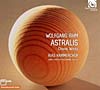
Andreas Scholl Photo: James McMillanThe rise of the modern countertenor and the resurgence in the popularity of Baroque opera have blessed contemporary audiences with some unsurpassed musical experiences. And no one vocalist may have accomplished as much along these lines as Andreas Scholl. He has few rivals in an increasingly crowded field of excellent performers and has excelled on both opera and concert stages. He is one of the most recorded vocalists of his age and next week, his latest Decca compilation of Bach cantatas will be available on line in all the usual formats. It’s a return to one of Scholl’s strengths given that Bach's music played such a large role in the earliest stages of his career. Scholl will be appearing locally in Los Angeles the day the recording becomes available in the U.S. by starting off a concert tour at the Walt Disney Concert Hall alongside Harry Bicket and The English Concert in a show that includes music from Purcell on October 11. The tour will take him to Carnegie Hall and Boston before he settles in for an extended stay at The Metropolitan Opera reprising one of his most famous roles, Bertarido, in Handel’s Rodelinda where he’ll join forces with Stephanie Blythe and Renée Fleming. Best of all, you don't have to be in New York to see it since the very photogenic Scholl will get the big screen HD treatment when Rodelinda is broadcast live in the company's "Live in HD" Series around the world on December 3. And you, lucky readers, get to share in the excitement now as Mr. Scholl was kind enough to subject himself to the OWA 10 Questions this week. Catch one of the world's greatest singers when he swings through the U.S. this Fall.
What role would you most like to perform but haven't yet?
Any role that Handel wrote for "Senesino" would be wonderful. The tessitura sits well for my voice.
What role would you never want to perform even if you could?
Maybe some atonal "extreme-singing" contemporary opera role.
Concert or recital performances enable me to establish a contact with the audience as Andreas Scholl whereas I have to personify somebody else in an opera-performance. These are two different worlds. I love the intimacy of a song recital accompanied by lute, harpsichord or piano only. This way I can stay with an audience for a while which usually develops a wonderful dynamic in a concert.
What is the best thing about being a countertenor?
The confusion of someone who hasn’t heard the voice before. There is an element of surprise that blocks the listener from categorizing instantly and ideally lets him receive the music itself and not the performer.
I would say that Bach’s vocal works for the alto voice are amongst the most challenging works for a countertenor. The compositions are executed in an instrumental manner and there is no place for technical weakness; Bach makes no compromises in his compositions in order to help the singer. On top of that the music has a tremendous depth and sometimes seems to a singer like a steep rockface for the freeclimber. So the reward of mastering this challenge is a wonderful "vision".
As one of the world's most leading vocal artists, you have worked with a variety of the world’s greatest musicians. Whom would you most like to work with that you haven’t had a chance to yet?
I met the Israeli singer-songwriter Idan Raichel this summer in Tel-Aviv. I am a huge fan and it would be a dream to work with him.
So much of the standard countertenor repertoire is Baroque music. What would be an ideal contemporary music project that you would like to help develop or participate in?
Any project that breaks with the established standard of music-presentation. It would need to be a project without "dark suit"; it would not take place in a concert hall, explore new spaces for music and combine singing with dance.
Andreas Scholl and Renée Fleming in Rodelinda at The Met Photo: Ken Howard/Met Opera 2006
That they are open minded about baroque music and haven’t yet adopted the "Baroque-Style-police" attitude which enslaves the performer as well as the audience to the myth of "authenticity." Human feelings and enthusiasm, love and passion for the music we are singing are "authentic." Instruments, choice of strings on a violin, temperaments and so on are empty formulas and not "authentic" in themselves.
What is your current obsession?
Filmmaking. I produced a documentary film about my singing teacher Richard Levitt. (He grew up in Los Angeles.) It was a wonderful experience to make a film, and I am already thinking about a new idea.
What can we look forward to in the coming years from Andreas Scholl?
I want to develop not only as a singer, but as a musical and creative personality. So in the future I want to combine different art-forms with baroque music and the countertenor voice in at least one project a year. I have already realized some of these ideas and there are many more to come.



Follow Along
Brian
Los Angeles
Follow me on Twitter